And what are those supported platforms? Why, here's some of them as they were being cruelly whipped to perform like beaten dogs for your entertainment:
Friday, July 15, 2022
Crypto Ancienne 2.0 now brings TLS 1.3 to the Internet of Old Things (except BeOS)
Who says you can't teach an old box new tricks? We did it before and we're doing it again. Crypto Ancienne ("Cryanc") is a TLS implementation for pre-C99 beasts and monstrosities featuring carl, a simple curl-like utility that serves as a demonstration command line tool and even as an HTTPS-over-HTTP proxy for suitably configurable browsers. Many operating systems are supported and a number of compilers too (not only gcc going back to version 2.5 and the egcs days, but also clang, MIPSpro, Compaq C and even Metrowerks CodeWarrior). Now, after a lot of late night hacking, screaming and unspeakable acts of programming, tons of bugs are fixed (including a long-standing big-endian issue with ChaCha20Poly1305) and the core has been significantly upgraded such that almost all of the supported platforms now support TLS 1.3.

Wednesday, July 13, 2022
CP/M is (more) officially open source
This is good news! Let's see more of these classic operating systems go open for a new retrocomputing generation. Specifically, from Bryan Sparks, the current owner of DRDOS and associated IP from Digital Research,
Let this paragraph represent a right to use, distribute, modify, enhance, and otherwise make available in a nonexclusive manner CP/M and its derivatives. This right comes from the company, DRDOS, Inc.'s purchase of Digital Research, the company and all assets, dating back to the mid-1990's. DRDOS, Inc. and I, Bryan Sparks, President of DRDOS, Inc. as its representative, is the owner of CP/M and the successor in interest of Digital Research assets.This was to clear up an apparent earlier misunderstanding that Sparks' earlier open release of CP/M in 2001 was restricted to distribution via a particular site. Sparks clarified this was not his intent.
Overall, would I prefer a more conventional open-source license? Sure. But he didn't have to do this then, he didn't have to do this now, and he did. So, thanks, Bryan.
Saturday, July 2, 2022
A brief dive into Power Mac INITs and NVRAM scripts, or, teaching Mac OS 9 new device tricks
Although I'd much rather use a real Power Mac, and of emulators I tend to use my own bespoke hopped-up fork of SheepShaver for the POWER9 CPU with my daily driver, QEMU is still important for Mac OS 9 emulation because it handles the full system rather than the quasi-paravirtualization approach of SheepShaver. Indeed, certain classes of application can only run in that context.
However, because QEMU is a much lower-level emulator, that means that things like mice are also emulated, and that tends to chug a bit even with QEMU's JIT (currently KVM-PR, the virtualization system for Power ISA, does not work properly with Mac OS 9 in QEMU for reasons that have not yet been determined). If you use the default mouse support, the mouse is entirely maintained by the operating system and the polling frequency is just slow enough to be frustrating, and you have to grab and ungrab it all the time. The normal solution is to use an absolute pointing device like the QEMU tablet and solve all these problems at once, but the classic Mac OS doesn't support it and the existing Wacom driver doesn't work. (SheepSforza, on the other hand, hooks the system mouse and system mouse pointer into the guest OS, so it's much more responsive and transparent if I do say so myself.)
To support this and other QEMU virtual devices requires updating the guest Mac. And, happily, there are now two approaches at least for doing so for the QEMU tablet, which make an interesting comparison on how we could get other devices supported on the classic Mac OS.
Sunday, June 26, 2022
Overbite Palm 0.2
Overbite Palm 0.2, the Gopher client for classic Palm devices, is now available (see it running on real hardware). This update includes Shawn Mulligan's Sony Clié key patch (thanks!) plus more aggressive memory management and menu compression, which should not only increase the number and length of documents that 68K Palms with their pathetic dynamic heaps can view but also cut down on the fatal Plua-generated "out of memory" errors that our memory heuristics failed to anticipate. Additionally, all transfers are hard-capped to 32K raw data since this appears to be the empiric limit for the native scrolling text gadget. It was tested on my Palm Centro and AlphaSmart dana, as well as my emulated m515. You can get it from Github (plus Plua source, natch) and I will be making a place for it on the Floodgap gopher server as soon as I get a round tuit.
Saturday, June 11, 2022
prior-art-dept.: ProleText, encoding HTML before Markdown (and a modern reimplementation)
Steven P. Spackman allegedly once observed that "flat text is just never what you want." Which, I guess, is true: half the historical advances in computing have come from figuring out ways to tart up plain text, whether embedding control codes or out-of-band styling or in-band markup. However, with the exception of out-of-band styling (I always liked the Macintosh text file formats that kept the text in the data fork and the styling in a resource), you still needed to parse the file or at best you'd get blocks of text separated by gobbledygook. Enhanced text formats like Markdown were thus designed to make cognitive sense to human eyes without further parsing — but also encoding sufficient metadata to facilitate improved ways of rendering the document.
Markdown circa 2004 has displaced most of the others today, but it explicitly never claimed to be the first such human-readable format; indeed, AsciiDoc predates it by about two years, reStructuredText a year before that and MakeDoc about a year before that. For that matter, some of the concepts popularized in Markdown might not have existed at all were it not for earlier ancestors like 2002's Textile.
But a forgotten rich text language predates most of these, with the interesting property in that much of the markup is encoded using trailing whitespace, almost a fusion of in-band and out-of-band styling systems. If the whitespace is munged, it's largely just a text document (like those particular Mac files if you pass along only the data fork); but if it passes through intact, an intelligent converter can use attributes encoded in the whitespace to style it into HTML. That system is ProleText.
Monday, May 30, 2022
So long, home T1 line; hello, hacking the T1 router
Floodgap has had a T1 line since I moved into this house in 2011. I'm one of those weirdos who runs my own hardware and prefers to avoid co-lo so that I can access things whenever I want despite the additional logistical complexity, and also acts as useful immunity against acquiring other expensive hobbies. The area was boonies-ish when I moved here (big house, cheap price, bottom of the market after the housing crash), arguably still is, and for at least several years there was no DSL due to its distance from the central office (fiber? hahahaha). Cable was around, but the only cable provider at the time refused to pull a run or even quote me a price to do so despite sending contractors on three separate occasions to scope out the site. After several weeks of downtime culminating in me making a formal complaint to the Public Utilities Commission, they agreed to stop messing around and released me from the contract. Of course, by then I was down for nearly a month.
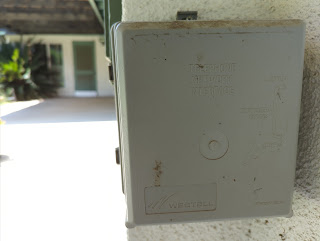
T1 lines have never been cheap, though back in the day they were prized because at 1.536 Mbit/s each way they were comparatively high capacity. At my first job out of college in 1997 the university had a T1 connected to an AdTran CSU/DSU, adding more T1 lines on and bonding them for additional bandwidth until they upgraded to optical fiber. A friend of mine in the very late 1990s had his own residential T1 (this was when consumer DSL was uncommon and 56K dialup was still frequent) that his employer paid the bill for, reportedly close to a cool grand a month in those days; he would never been able to afford it otherwise. On a cost basis alone (and certainly dollars per megabit) a T1 would have been far from my first choice, but I needed a reliable server-grade connection and I couldn't find any other alternatives at the time, so if I wanted to get my hardware back online from the house I was going to have to pay up and get one. Rather than use the actual telephone company I went with an overlay vendor and was quoted $295 a month on an annual contract for a 16-address netblock plus $199 installation. Now going into my fourth week of downtime, I signed immediately. They called the telco who came out the next week, installed the smartjack (we'll talk about what this is), took over both telephone wire pairs to the house and wired it into the pedestal — conveniently, the local telco pedestal is literally in my backyard. Good thing I'd already moved the house alarm modem to a wireless connection since I could no longer have a landline now. I then ran lines from the smartjack into the server room (thanks to the telephone guys I used to work next to when I was consulting I already had good experience with a punchdown tool), the vendor came out the week after that with the T1 router, and finally Floodgap was back up.
The original idea was to use the T1 until something less expensive came along, but the T1 just plain worked and was always highest priority on service calls, so inertia and inflation eventually turned the $295 a month into $399 and a 12-month contract into 48. Still, it was a tariffed line with a service-level agreement, I had plenty of addresses and my personal bandwidth requirements have always been modest — I don't cloud, I rarely stream and YouTube is worse than television — so I ended up just using the T1 as my personal ISP at the same time and avoiding a second bill. This worked out fine for awhile except, of course, for love. My wife needed her Netflix and her iCloud, and by then the previously intransigent cable provider had been bought by someone else (fiber? hahahaha) who didn't know any of the previous history; they came out and finally pulled an RG-6 cable run five years after the fact, and switched us on. I moved the Wi-Fi to the new cable net and her bandwidth needs were thus met in the manner to which she was accustomed. We joke about the his'n'hers networks: I still had my lab and servers on the T1, and everything else including her devices was on the cable.
Well, it was good we did that because I mentioned in January this year that the vendor (which had changed owners twice over the years) was abruptly getting out of the residential T1 business and I had a month before it was switched off. I may well have been their last customer in the region. So I'd like to publicly thank John who reached out and offered a no-strings VPN arrangement — which I'm routing over the cable — to keep Floodgap online while we consider our housing options in a market as bad as it was good when I first bought the place. We turned the VPN on and the vendor turned the T1 off. They never asked for the router back and the smartjack still sits in the back of the house.
Now it's Memorial Day in the United States and I suppose I'll have to do something about that now superfluous wiring run sometime soon. Before I do, though, let's document the T1 for a generation who may have never seen one ... and figure out something fun to do with the router they left behind other than, you know, routing stuff.
Like every computing story, this one begins with a box.
Wednesday, May 4, 2022
Gopher on the Palm Pilot and the pitfalls of PalmOS connectivity
To start, an apology for 18 years of tardiness.

In 2004 I was working on a gopher client for my Palm m505, written in Lua using the new hotness of Plua 1.x, which supported UI, graphics and networking built-in. I christened an early implementation as "Port-A-Goph" and it even got a mention in Wired. Due to socket bugs in that version that never got fixed, I deferred the release until I could rewrite Port-A-Goph for Plua 2. Over the next few years I worked on it intermittently but got distracted by other projects, and eventually after moved to iOS and then Android I stopped carrying a Palm around with me entirely. Since I have my own Gopher client on Android, the PalmOS version sat in suspended animation.
Well, it's time to dust off the resurrected Port-A-Goph, newly christened into the Overbite client family as Overbite Palm. Along the way we'll make sure it works on a selection of real hardware:
Sunday, April 10, 2022
Tonight we're gonna log on like it's 1979 (Telenet, Dialcom and The Source)
Monday, March 28, 2022
prior-art-dept.: 5 letter words (Jim Butterfield's Jotto)
Friday, March 25, 2022
xa 2.3.13 and dxa 0.1.5
I've updated xa, André Fachat's venerable 6502 cross-assembler, to version 2.3.13, but also dxa, its companion disassembler based on Marko Mäkelä's d65, to version 0.1.5. I keep promising version 2.4, but somehow for years we never noticed that // and /* */ in quoted strings get improperly treated as comments instead of part of the string, and that seemed a pretty important bug to fix. A test case is now part of xa's fairly extensive regression analysis suite. 2.3.13 also includes patches for segfaults with parameter handling (but never run xa as root, kids, it kills kittens) and a miscellaneous correctness fix with null file handling. Although its development home platform remains AIX (with gcc) because I'm one of those people, and portability mumble mumble weird operating systems mumble endian, it is also tested and validated on Linux/ppc64le (gcc and clang), NetBSD/macppc and NetBSD/mac68k (gcc), and Mac OS X macOS (gcc on PowerPC, and clang on x86_64 and Apple silicon). Seriously, this is the last 2.3 release, dammit. No fooling. I mean it.
dxa's development was a little more colourful. This started with a file that didn't disassemble correctly (Paradoxon BASIC from 64'er, as it happens) because apparently d65 was never able to handle files that stretched riiiiiiiiiiiight up to the very last addressible byte ($ffff), let alone files that overflowed the addressing space or were bigger than 64K. However, even with that problem fixed, this particular test file also caused dxa to emit completely nonsense branches with unpossible displacements and even jumps to non-existent labels. This violates its core guarantee that you should be able to take dxa's output, feed it back into xa and get the binary you started with. It turns out that this is due to some weird C casts used for interpreting relative branches, so I made them more explicit, plus changes in the C preprocessor that caused the macro to check if a label exists to evaluate to true in one place and false in another. I think this file made a great test vector, so now dxa has a test suite too (make test; xa is naturally required) using it and a DOS wedge routine, and I'll probably throw in more exemplar code in the future. This new test suite is already earning its keep: it found a new bug when dxa is compiled with clang, which required even more reworking of the same section and some nearby code. Interestingly, even though now the test suite passes on all the same platforms as xa, dxa-built-with-clang generates subtly different output than dxa-built-with-gcc despite the fact the assembly files they both generate will yield bitwise identical binaries. Most of this seems to circulate around detecting vectors; clang flavour finds this in some places that gcc doesn't and vice versa. It's deterministic and predictable, but I'm not sure which one of them is "doing it right," so for now it'll be a curiosity until I can dig more into the differences.
Both xa and dxa are available under the GNU Public License v2.
Wednesday, February 23, 2022
KIMdle: Sorta-Wordle for the KIM-1
UPDATE: I'm trying to solve a debouncing bug for someone who reported it, though I can't reproduce it. If you have a similar issue on real hardware, please try the version up now.

Wordle mania (trademark, probably, of the New York Times) continues. My wife and I, who bonded over word games and later got married because that's how you pick a good life partner, play daily on a private instance, except that she's 19 hours ahead so she has to be careful not to give out spoilers. Retro has gotten into the action. There are Wordle ports for Windows 3.1, Palm Pilots, Game Boys and at least three versions for the Commodore 64, such as this, this and this poop themed one called Turdle, ha ha ha.
Still, however, while these ports ditch dependence on JavaScript and HTML, they still rely on other modern conveniences such as, you know, a screen, a keyboard, and multiple kilobytes of RAM.
You see where I'm going with this.
Thursday, February 17, 2022
Refurb weekend: Texas Instruments Silent 700 Model 745 teletype
Friday, February 4, 2022
Overbite Android 0.2.6
UPDATE: I've received a couple reports the .apk doesn't install. The actual reason is that the keys, and thus the author signature, have changed and Android doesn't let you replace an app with another app signed by "someone else." Delete the old version and install this one fresh rather than installing it over the old one. Sorry about the inconvenience.
 Overbite Android 0.2.6 is available, the (persistently alpha-quality) native Gopher client for Android. This is merely a maintenance update for version 0.2.5 to fix visual issues with dark mode and Android 12, and a couple edge crashes. The screenshot is from my Pixel 6 Pro (the camera still crashes on it, Google, damn your eyes) running Android 12 but this release will still work with and is tested all the way back to 4.0.3 (Ice Cream Sandwich). After all, this is a retrocomputing blog! Source code for Android Studio (built with Bumblebee) is available under the BSD license.
Unfortunately, it is likely that 0.2.x will be the last release of Overbite Android to support OS versions prior to 9.0 (Pie). This is because right now I'm running Android Studio on an M1 Mac (hoping to get it working properly on my Talos II, but not there yet) and it is apparently not possible to run API 27 or earlier under the emulator. (I tried myself and it just dies immediately. There should be a way to make it run within a full system emulator, but it doesn't.) For testing purposes I dug out an Intel MacBook Air with a previous version of Android Studio, booted up a emulated Galaxy Nexus with 4.0.3 and checked the APK installs and runs, but this is rather inconvenient to test with for obvious reasons, and Google doesn't make it easy for you to keep working with old Android versions if you're trying to also support new ones. For the time being, though, I still think supporting a 10+ year old release of a mobile operating system is pretty darn good, and if I do any other 0.2.x bugfixes I will at least test them to the extent I can on Android 4 before release.
Yes, I know Overbite Android still doesn't do downloads yet. This is largely laziness on my part, since I'm only scratching the itches I personally have, and I haven't needed to download files via Gopher to any of my Android devices so far. But that's probably the major feature I plan to introduce in 0.3 when I get some time to sit down and actually write the support.
Old releases compatible back to Android 1.5 (Cupcake) are still available, including source code.
Saturday, January 15, 2022
prior-art-dept.: OWL Guide, early hypertext, and "replacing" the Web
Of course, hypertext didn't start with the microcomputer; one of the earliest document-oriented forms (as opposed to card- or frame-oriented like HyperCard or KMS, as well as other concepts) was the 1967 Hypertext Editing System, running on a partition on an IBM System/360 Model 50, contemporary with the baroque but much celebrated oN-Line System which formed the basis for the 1968 Mother of All Demos. However, the microcomputer was where it started to gain steam, with early text-only implementations like the DOS-based 1983 PhotoQuery, which became TIES in 1984. TIES' key innovation was advancing the convention that the text itself contained the links embedded within it, rather than navigating using external numbered menus, codes, icons or other gadgets. (TIES later evolved into HyperTIES, which in 1988 introduced early implementations of imagemaps and style sheets using its own "HTML" [HyperTIES Markup Language] for screen design, also based on SGML. HyperTIES was credited as the first instance where hyperlinks are blue.)
This was a natural fit for GUIs, and hypertext/hypermedia flourished on the early Macintosh. Naturally everyone remembers HyperCard and its various clones, the archetype (but not the prototype) of card-based hypermedia, but one of the earliest hypertext systems on any desktop computer was OWL Guide for the Mac, dating to 1986.
Saturday, December 25, 2021
Merry Old VCR Christmas
Signs you married well: your wife buys you vintage artifacts for Christmas, in this case a logic chip and fragment of a PCB from the Cray-1 at the Lawrence Livermore National Laboratory.
 (The other chips in this picture are IBM dies from a 90MHz PowerPC 601+ and a POWER9.)
 Merry Christmas and a very happy holiday season.
The chip is a Fairchild SL56660, a 5/4 NAND gate. The original design only employed four ICs but in huge quantities: this one, an alternative but slower NAND gate, 1Kx1 bipolar SRAMs (usually the Fairchild 10415FC, about 70,000 of them in the 1976 Los Alamos National Laboratory unit), and the specialized Fairchild SL82747. This chip bears a date code of 14th week 1981 and is based on emitter-coupled logic (ECL), making it very fast for the time but also very power-hungry; CMOS made ECL and MECL obsolete. The later date code can be attributed to the fact this was probably from a board installed for repair purposes.
Sunday, December 19, 2021
Monitoring the vintage server room (and reverse-engineering USB sensors)
Friday, November 26, 2021
xa 2.3.12
I've updated xa, André Fachat's venerable 6502 cross-assembler, to version 2.3.12. This contains a bug fix for a regression in 65816 mode which I'd meant to release earlier but got sidetracked on (thanks Samuel Falvo for the nice test case, which is also incorporated into the suite). As with prior versions it is tested on pretty much all of my Un*x-alike systems here including AIX, Mac OS X (PowerPC, Intel and Apple Silicon), NetBSD/mac68k and Linux/ppc64le. I said this before for 2.3.11 but one more time for the record: this will probably be the last in the exceptionally long-lived 2.3 series before 2.4, which as I keep warning you will definitely have some minor compatibility breaks and jettison a couple long-deprecated options and syntaxes (but will have some new features to make up for it). Again, more to come on that.
Sunday, October 3, 2021
Shiner ESB, an Apple Network Server prototype, and what it did at Netscape/MCom
The ANS, however, was a real honest to goodness server with hotswappable drive bays and fans, and (its most notable feature) an award-winning lockable translucent door so you could keep the unwashed masses out of your drives but still watch the blinkenlights. If you bought the bigger model, you even got dual power supplies and additional rear bays.
Also notable about the ANS was that they weren't supposed to run Mac OS, and were never sold with it, not least of which because the classic Mac OS wasn't really up to the task of being a server. Unfortunately, while A/UX supported larger needs on the 68K-based Workgroup Servers that could run it, A/UX 3 couldn't run on Power Macs even under emulation. The plan with A/UX 4 was to use a new PowerPC-native OSF/1-based kernel and possibly to also integrate portions of IBM's AIX operating system, but this plan (along with Taligent and other doomed projects) stalled out with everything else in Apple around that period. For a time Apple even considered using Novell NetWare on PowerPC; the port actually existed, codenamed Wormhole, but its tepid reception eventually led to the release of the weird Workgroup Server 9150 which just ran Mac OS. Eventually, to get to market Apple reached for what was then the only professional-level Un*x running on the new PowerPC architecture, which was AIX itself. Three Apple Network Server models were developed but only two (the "Low End" 500 and "High End" 700) were released; the 3U rack 300 "Deep Dish" remained solely a prototype, which I'd still love to acquire if its current owner ever gets tired of it. Oddly, even though they were only ever sold as AIX machines, they were initially demonstrated running Mac OS (possibly a custom version), further confusing potential customers who already didn't want to buy Workgroup Servers. Introduced in 1996 at a retail cost starting north of US$10,000, which didn't even include the AIX license, they were very poor sellers and the line was canned by Gil Amelio around a year later.
I got my ANS 500 barely used for the cost of some consulting work after Apple stopped supporting it; you can see some scanned Polaroids of when it was in production way back in 1998. Later, I acquired an ANS 700 which I use as a spare and was briefly in service while I diagnosed a hardware issue with the 500. More recently, however, I managed to land a Shiner HE prototype dated 1995 from a scrapper in San Rafael, California. That is the unit depicted in these pictures.
Tuesday, September 21, 2021
A happy ending (and future) for Plua
In my previous article on Plua, a port of Lua to classic PalmOS, I mentioned I was hopeful we'd have a happy ending where there was a clean-room implementation, or better still, that the original author would get in touch with me and we could redistribute it.
Well, I'm pleased to announce that Marcio himself did get in touch (he's got a lot of fun Palm and retro projects still underway, incidentally) and graciously consented to relicense Plua2c, the "cross-compiler" portion, under the same MIT license as Lua itself. You can now download the source code from Github, which I'll keep maintained.
As for Plua-the-Palm-app and its various components, I will still be hosting the .prcs on Plua Revisited indefinitely, and Marcio and I have been discussing how we can add some improvements such as expanded screen size support and the like. This means Plua has a future again, and I couldn't be happier. Thanks, Marcio!
Thursday, September 16, 2021
RIP Sir Clive Sinclair
In the US the name Sinclair is more associated with gas stations and partisan media outlets than computers. We had only the Timex Sinclair series States-side, of which the major models were the T/S 1000, a rebadged ZX-81, and the 2068, which was an upgraded but partially incompatible ZX Spectrum. (There was also the T/S 1500, a more upmarket version of the T/S 1000 roughly analogous to calling the Cimmaron by Cadillac a more upmarket Cavalier, and two minor non-American spinoffs of the T/S 2068, the TC2068 and UK2068.) These sold quite poorly in the United States because of the dominant position of the obviously superior Commodore 64 (I'm bracing for the comments from Martin), despite at least one retailer selling T/S 1000s at firesale prices so customers could get a rebate on a Commodore purchase. (Commodore reportedly used some of them for doorstops.) In the UK and Europe, however, they were a hit because they were cheap, and they introduced a generation to computers that may not have been able to afford them otherwise. My T/S 1000's keyboard has crapped out and I'm not even sure where my 2068 is, but on the announcement of Sir Clive Sinclair's death from cancer at 81, hats off, gentlemen, and godspeed.
Subscribe to:
Posts (Atom)